What Financial Reports Should I Look at Every Month to Know My Business Is Healthy?
Nate Holland · Dec 24, 2025 · 9 min read
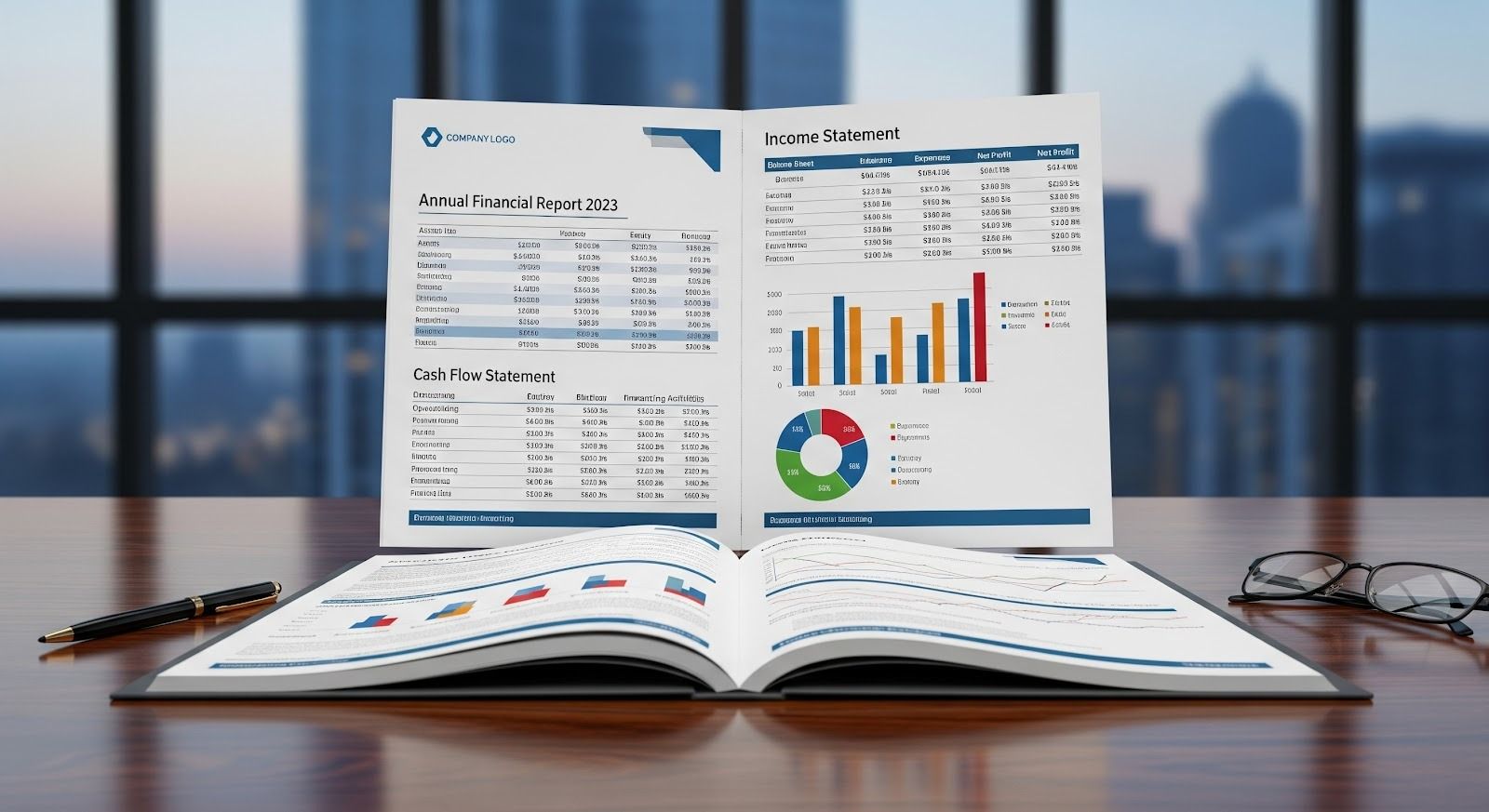
You want a friendly, easy-to-browse article that explains precisely what to peruse monthly to check the health of the business, even as it integrates every anchor once (and in differing parts).
Operating a business can feel like flying an aircraft while you are still building it. Some months you are hustling (which is nice), but then again you find yourself asking: How exactly are we doing... or are we just doing a lot?
The good news is you do not need a qualification in Finance to find enlightenment. A minimal amount of monthly financial reports can inform you in simple English that your business is healthy, where it is heading, and what needs to be corrected before it becomes painful.
The main reports that are worth going through on a monthly basis, what each of them actually informs you, and a basic routine to ensure that it becomes a habit are presented below.
Report #1: Profit and Loss (P&L) — Are we making money?
If you review only one report per month, go through the Profit and Loss statement (also known as an income statement). It is a summary of revenues, costs, and expenses of a given time-period, normally the month and the year-to-date.
What to look at monthly:
- Trend of revenue: Does it increase, stagnate, or decrease compared to the month before and the same month the year before?
- Gross profit: Does the amount of gross profit left after direct costs (materials, subcontractors, product costs) meet your satisfactory mark?
- Operation costs: Are operating costs making a silent creep?
- Net profit: Not merely positive, but worthwhile to compensate for the risk you are undertaking.
Two quick hints to make your P&L more helpful:
- Compare this month and this year-to-date side by side, so that you do not overreact to an odd month.
- You can categorize group expenses by how you conduct the business (marketing, payroll, software, contractors), not as a haphazard list of miscellaneous charges.
Positive indicator: The revenue is steady or increasing, the margins remain the same, and the expenses increase at a lower pace in comparison with sales.
Red flag: Sales are increasing but profit is not—usually due to discounts, increasing direct costs, or overheads.
Report #2: Balance Sheet — Are we creating stability or concealing risk?
The Balance Sheet is the least used report by small business owners—yet it is one of the strongest. It reveals what you have (assets), what you owe (liabilities), and what remains (equity) at a given point in time.
What to check each month:
- Cash position: What is the actual amount of available cash?
- Accounts receivable (A/R): How much do your customers owe you—and is it becoming increasingly old?
- Accounts payable (A/P): What you owe suppliers, contractors, or credit cards.
- Debt balances: Does the loan or credit card balance have a downward trend or just a silent increase?
- Sales tax / payroll liabilities: These may creep in and create big headaches when neglected.
This report also informs you on whether your books are clean or not. In case of weird negative balances in your Balance Sheet, unknown items, or the presence of suspense accounts that never get cleared, other reports cannot be trusted.
In case you are always noticing these bizarre numbers, then you should consider engaging an accounting specialist to rectify the underlying structure and monthly balancing procedure. You do not require sophistication; you want precision you can rely on.
Good indicator: It has controlled liabilities, receivables are not old, and debt is not increasing without a course of action.
Red flag: Increasing balances in credit cards, increasing amounts of unpaid taxes, or accounts that hang unpaid between 60 to 90 days.
Report #3: Cash Flow Statement — "Why is cash not equal to profit?"
Did you ever have a good month, and yet you were broke? This is what the Cash Flow Statement describes.
As the P&L follows the profitability, the Cash Flow Statement follows the cash-in and cash-out—usually divided into:
- Operating activities (cash of daily business)
- Investing activities (equipment, major purchases)
- Funding operations (borrowing, contribution of owners, debt repayment)
What to look at monthly:
- Net cash outlay operations: Does your business cash out normally?
- Largest cash change drivers: Has cash gone down due to an increase in receivables, increase in stock, or a surge in debt payments?
- Stability: A bad month does not mean the business is doomed; however, when operating cash flow is negative every month, it is an indicator.
Healthy indicator: Positive operating cash flow in the long-term, intended investing, and manageable financing.
Red flag: Only borrowings, deferral of bills, or personal funds are able to stabilize the cash.
Report #4: Accounts Receivable Aging — "How fast are we collecting our accounts receivable?"
In this report, unpaid invoices are grouped by age, including: 0-30 days, 31-60 days, 61-90 days, and 90+ days. It has a direct impact on your cash flow and level of stress.
What to look at monthly:
- Total A/R balance/monthly revenue: Is it increasing proportionately or becoming heavy?
- The 60+ day bucket: It is here that profit on paper becomes real cash problems.
- Concentration of customers: A large percentage of A/R held by one customer is risky.
Basic things that make A/R quicker:
- Issue invoices as soon as possible (not when you get a chance).
- Set pay terms and late reminders.
- Provide a convenient payment system.
- Follow up on a schedule, rather than based on feelings.
Normal finding: A majority of A/R occurs within 0-30 days.
Red flag: Old invoices are piling up and you are wishing that they will pay in the near future.
Report #5: Budget vs Actual — Are we on track or drifting?
A Budget vs Actual report compares how you had planned to spend/earn with what really occurred. It is where financial awareness is made into reality.
What to review monthly:
- Revenue vs plan: Are you performing below plan? Do you need more pipeline, a change in price, or new offers?
- Significant expense variances: Which ones are regularly overrun in estimations?
- Profit vs plan: Have you generated the specific profit you require, rather than just an amount of profit?
Strategy also comes into the picture at this point. Should you wish to tie the current numbers to objectives such as hiring, paying off debt, or saving towards taxes, a business financial planner can assist you in transforming a budget into a real monthly game plan (not a spreadsheet that is put aside).
Healthy sign: You know the reason behind variances and make changes in time.
Red flag: There are surprises each month, and there is no evident intention to rectify the situation.
An easy monthly review process (takes approximately 30-45 minutes).

You do not have to spend hours looking at reports. The trick is repetition and consistency.
Try this routine once a month:
- P&L: Scan revenue, gross margin, net profit, and overarching leading expense items.
- Next Cash Flow statement: Did cash flow in accordance with what you believe is occurring?
- Balance Sheet check: Observe some abnormal changes in A/R, A/P, debt, and taxes payable.
- A/R Aging: Determine who requires follow-up and delegate it.
- Budget vs Actual: Determine what to change after next month (not next quarter).
When you have time, select the same day of the month, such as the 5th or the 10th, after a review of your bookkeeping. Regularity enhances the ability to detect patterns.
Conclusion: You do not need additional reports: you simply need the correct ones.
Monthly financial reporting is not about judgment. It is about identifying reality at an early stage, so that you can make wise and level-headed choices rather than respond to the unexpected.
Looking at your P&L, Balance Sheet, Cash Flow Statement, A/R Aging, and Budget vs Actual monthly, you will be in a better position to know your business than most owners, even though you may not be a numbers person.